
SWAN announces follow-on investment in Pecos Wind Power

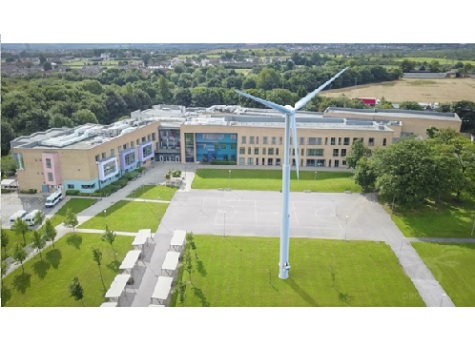
SWAN investors are proud to support a follow-on investment in Pecos Wind Power, a company developing and manufacturing community-scale wind turbines that enable low-cost, on-site power generation—ideal for rural and agricultural markets. Pecos was named a recipient of the U.S. Department of Energy’s 2024 Competitiveness Improvement Project (CIP) award, part of a $3.2 million initiative supporting distributed wind deployment in farming communities. This award aligns with the USDA and DOE’s new RAISE initiative, designed to reduce market barriers and drive clean energy adoption in rural America. Read more about the CIP program and this year’s awardees here.

SWAN investors first backed Pecos Wind Power in 2022.


SWAN announces investment in Ecosystem Informatics

SWAN is pleased to announce an investment in Ecosystem Informatics (ESI), which is dedicated to providing advanced AI-driven data and analytics solutions to help organizations monitor and improve air quality.

ESI’s multi-modal solution means that customers can cover a very large area at a very low cost, with either terrestrial or aerial mobile platforms, complemented if required by a fixed platform. AI-driven self-calibration means that ESI can deliver continuous real-time measurements with its mobile platform. ESI is thus first to provide 3D mapping of air measurements. ESI works with governments, businesses, and industries to protect public health and promote sustainability through smarter, data-driven decision-making; it is FIWARE ready, easing the way for cities to get the data they need for their decision.

The Pros and Cons of investing in carbon-credit related startup companies

Carbon credits are part of the overall solution for reducing CO2 in the atmosphere and have attracted significant interest from investors and companies.

When considering investing in a carbon-credit related  startup company, it may be helpful to consider the following Pros and Cons.

Pros

  • The world must find ways to slow global warming.
  • Startups developing carbon reduction products may find that their customers can benefit by selling credits generated when using the company’s products. This may incrementally lower the sales friction encountered by the startup.
  • A startup can directly deploy carbon reduction technology and benefit from selling credits. For example, the startup can own and operate wind or solar power generation facilities or can own and operate systems that capture and utilize the methane gas that is emitted from waste disposal sites, coal mines, or livestock farms.

Cons

  • Thinking big picture, carbon credits are an indirect approach to reducing carbon entering the atmosphere, and most often don’t reduce CO2 at the source, where the CO2 is most concentrated.  And  the purchasing of carbon credits allows buyers to avoid reducing or eliminating their own emissions and may be motivated more by a need for greenwashing marketing campaigns than a financial commitment  to slowing global warming.
  • If the company’s primary mission is to sell carbon credits, consider that carbon credits are unregulated and vary widely in quality and impact. There is no standard way to measure, verify, and certify the emissions reductions or removals that carbon credits represent. Some carbon credits may be based on dubious or fraudulent projects that do not actually reduce or remove greenhouse gases from the atmosphere.
  • Carbon credit marketplace startups face the same challenge that every marketplace startup faces, namely, achieving a balance of supply and demand, and having to be equally successful with two disparate marketing campaigns.
  • A carbon credit selling startup may be creating credits planting monocultures of trees, which are inherently damaging to the environment by decreasing biodiversity has negative impacts on soil quality, water availability, and wildlife habitat, thereby reducing the resilience and adaptability of forests to climate change and natural disasters. Insect and bird populations around the world are plummeting precipitously in part due to the destruction of the biodiverse habitats that they depend upon. Read more

SWAN Announces Follow-On Investment in Vartega

The SWAN Impact Network is pleased to announce a recent follow-on investment in Vartega.

The company’s goal is to increase the amount of carbon fiber that is recycled. Vartega makes recycled carbon fiber more affordable and accessible for manufacturers to use via its patented recycling process and helps to divert waste from landfills.

SWAN previously invested in Vartega in 2021.

SWAN Announces Follow-On Investment in Elevation (Curb)

The SWAN Impact Network is pleased to announce a recent follow-on investment in Elevation (Curb).

The company’s goal is to make homes more energy efficient and reduce greenhouse gases. Elevation (which purchased SWAN portfolio company Curb Energy) offers a unique combination of solar, energy efficiency, and energy monitoring technology to provide homeowners with the most complete solution for smarter home energy with lower carbon usage.

SWAN previously invested in Elevation (Curb) in 2017, 2019, 2020, 2021, and 2022.

Portfolio company Yotta Energy Selected to Participate in The Clean Fight New York

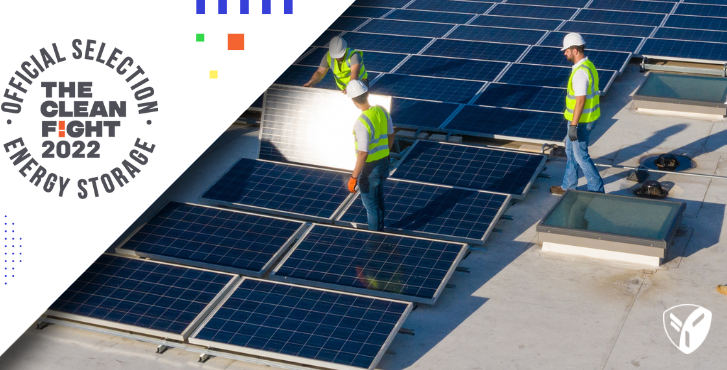
Congratulations to SWAN portfolio company Yotta Energy, which was recently selected as one of 10 companies to participate in The Clean Fight New York. The Clean Fight New York is a not-for-profit climate tech organization, powered by New Energy Nexus, that helps scale growth-stage climate tech companies in New York. The third chapter of The Clean Fight is focused on battery and energy storage solutions that can help speed the clean energy transition.